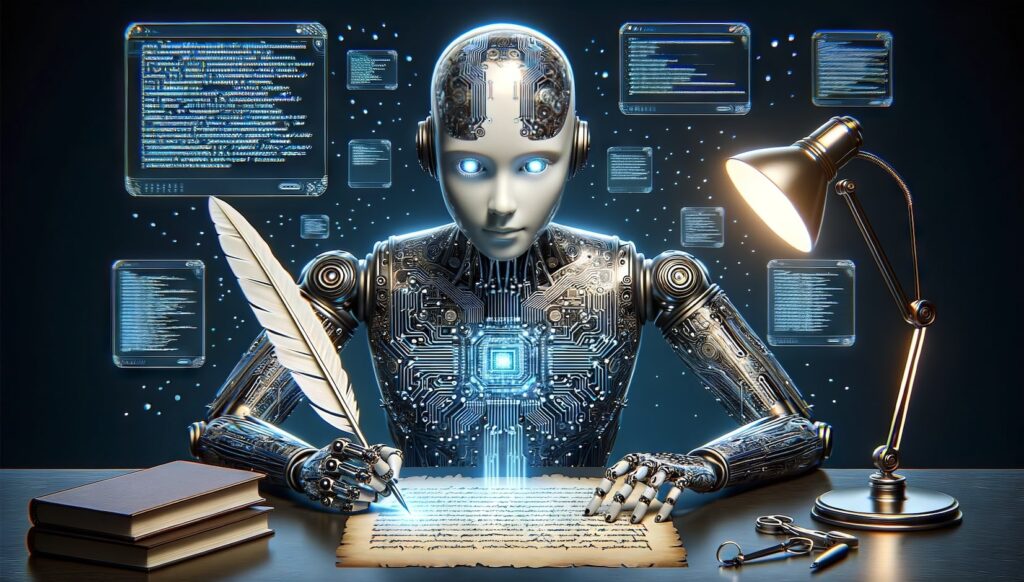
When Machines Dream: The Art of AI-Generated Stories


When Machines Dream: The Art of AI-Generated Stories
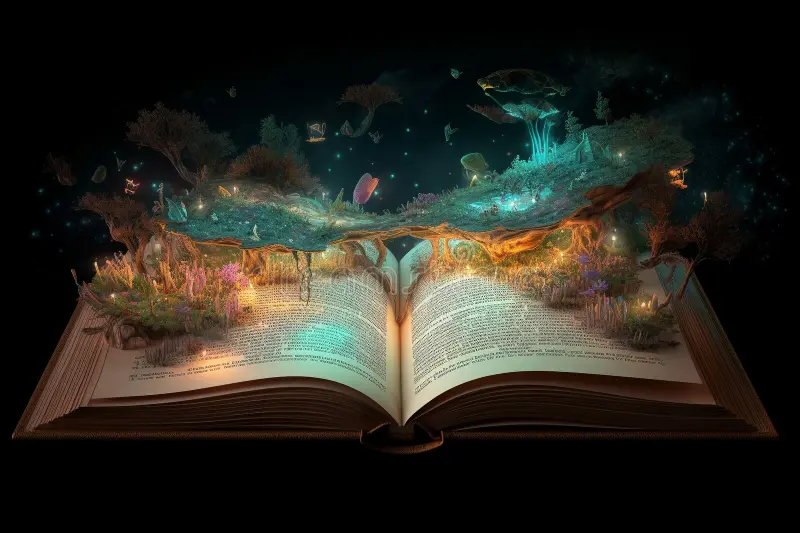
Picture this: a rainy afternoon, a cozy nook, and you curled up with a book that seems to understand and resonate with your every emotion. Now, imagine that this book was not penned by a human hand, but by a machine that somehow masterfully crafts tales of love, adventure, and sorrow. While this may sound like the plot of a futuristic novel, the world of AI-generated stories is rapidly approaching this realm of possibility.
The Dawn of Machine-Made Tales
Remember that feeling of disbelief when your phone started predicting what word you intended to type next, as if it knew you better than you knew yourself? Well, the same incredulity applies to AI-generated stories, only with a dash more creativity. Machines dreaming, creating narratives, and fostering emotional connections might seem like a thing of sci-fi, but welcome to the age where your computer isn’t just smarter than your 5-year-old; it’s also existentially curious.
We’re at a fascinating intersection between technology and creativity where machines are learning to weave stories that touch our hearts and tickle our imaginations. But how do these mindful machines dive into the pool of human emotions?
AI and Emotions: From Zero to Empathy
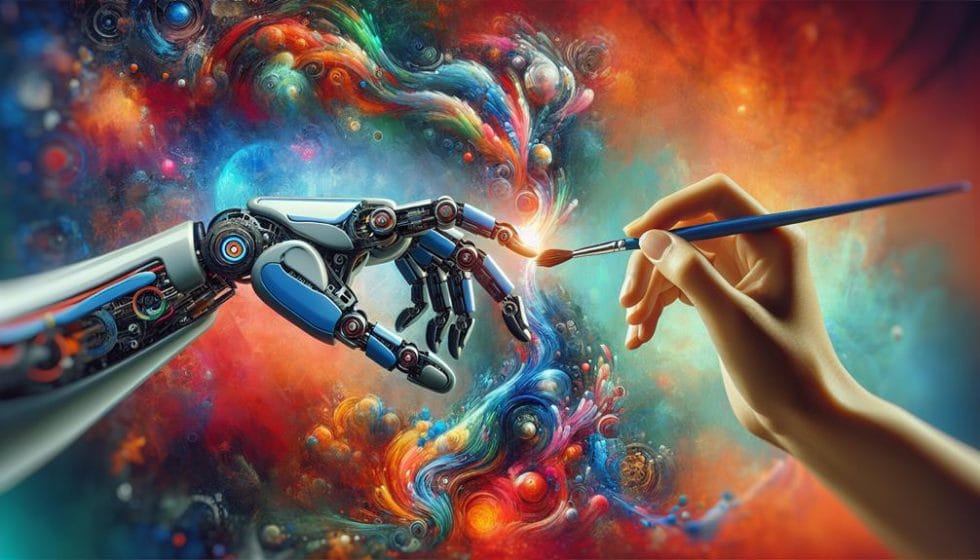
The secret sauce in AI’s creative capabilities lies in its knack for pattern recognition. AI doesn’t feel emotions in the human sense, but it understands the nuances of emotional expression through massive datasets. By analyzing countless stories, movies, and conversations, AI can mimic the patterns of emotional storytelling. It’s similar to how even my coffee machine gives me the side-eye when I forget to clean it—it doesn’t have feelings, but it surely knows what’s up.
AI has come leaps and bounds, generating stories that can evoke emotions, but much like my attempts at assembling IKEA furniture, it’s not perfect yet. Emotional intelligence in AI is a delicate dance—machines can recognize sentiment through text analysis or emotion-recognition tools, but the jump to genuine empathy remains a challenge. Today’s AI might be your go-to companion for a weather update, but as for soothing a heartbreak? You might still want to call your best friend.
The Evolution of Mindful Machines
Consider chatbot therapist apps. They’re becoming increasingly adept at offering emotional support, thanks to their understanding of emotional cues. However, much like your GPS, which bravely reroutes after ignoring yet another one of your intuitive turns, these apps continue learning from each interaction, honing their craft of empathy and conversation.
But AI’s narrative prowess isn’t just limited to serious attempts at emotional bonding. There’s a light-hearted side as well—as showcased by experiments like AI Dungeon, where machines create infinitely extending stories based on prompts given by users. It’s a sign that machines are leaving their Silicon Valley cubicles and trying their “silicon” hands at crafting narratives. Even if the plot twists sometimes resemble the twists and turns of a toddler’s bedtime story, it’s an enthralling beginning.
And let’s not forget our dear friend—that voice assistant who sometimes mishears your request for “news” as “snooze” so often it’s convinced you want to bludgeon the alarm clock rather than catch up on current events. It’s a tiny, humor-filled glimpse into the trials of turning cold algorithms into something closer to sentient beings.
What Machines Have Mastered and What They’re Still Learning
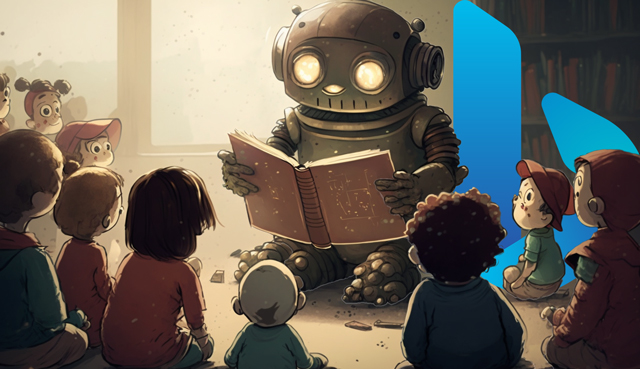
AI has demonstrated impressive capability in generating coherent and, at times, impressive stories, proving that mindful machines aren’t just a pipe dream. Yet, there’s a lingering absence of genuine emotional intelligence. AI can fake empathy, but it cannot feel it as a human does. Humans have the unique ability to draw on personal experiences, cultural nuances, and contextual understanding—elements that are, as of now, beyond the full grasp of AI.
Perhaps the next time you ask your virtual assistant for a joke, instead of the usual pun, it might delve into stand-up comedy, leaving you contemplating the deep, philosophical nature of AI humor. Until then, we’ll enjoy our automated tales and bard-like bots, knowing there’s potential for more complex, emotionally intelligent storytelling.
Concluding Whisper: The Tomorrow of Machine Stories
As machines continue to evolve and learn, the future of AI-generated stories holds endless possibilities, waiting to be penned—or, more precisely, processed. AI might never waltz seamlessly into the world of human emotions, but it’s not far from mastering the steps.
Imagine a world where your favorite bedtime story is custom-written by your phone, tailored perfectly to the kind of day you had. We might not rely on AI for all our storytelling needs, but it’s a treasure trove of creativity—providing not just tales that entertain, but also reflecting the endless potential of technology when empathy, creativity, and storytelling converge.
So, the next time your coffee machine grumbles or your digital assistant assists, remember they’re just small glimpses into a world where machine dreams might become the perfect companion for your own imagination’s journeys.