
The New Poets: How Machines are Changing Storytelling


The New Poets: How Machines are Changing Storytelling
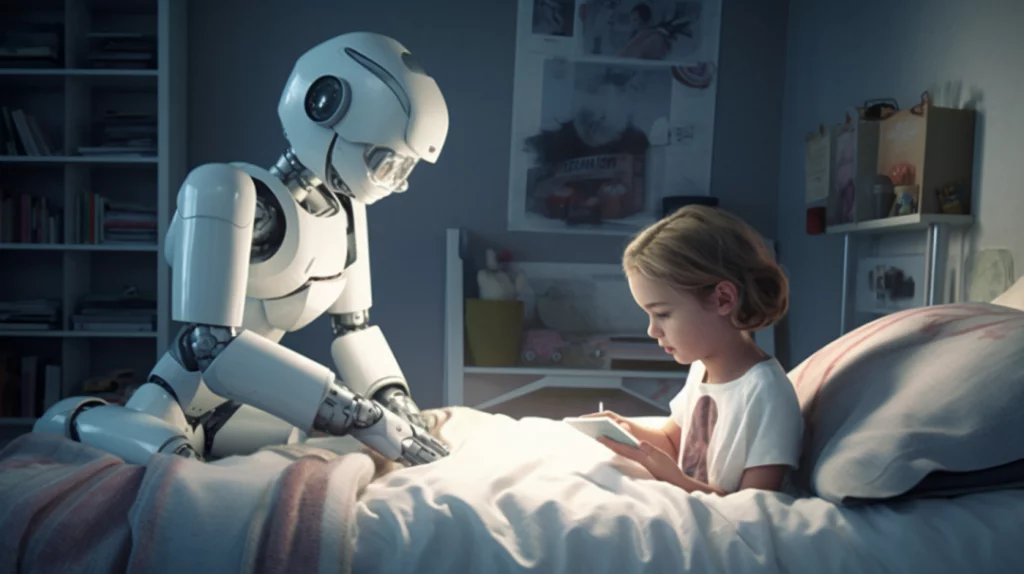
Once upon a time, in a world not so far away, tales were spun by bards who wore feathers in their hats and serenaded village folks by the warmth of a bonfire. Today, while we still find comfort in a cozy book or a captivating film, the landscape of storytelling is transforming. Picture this: a digital bard with circuits for brains and lines of code for ink. Yes, you guessed it — we’re talking about AI. And it’s not just writing copy and answering trivia questions. AI is diving deep into emotional territories, sketching stories that stir the heartstrings. But how, you might ask, can a robot write poetry? Well, grab a cup of your favorite brew (even if it’s the fourth time your coffee machine judges you today), and let’s dive into this fascinating tale of AI and emotions.
A Match Made in Cyberspace: AI and Emotional Intelligence
Before we dive into specifics, let’s address the steel elephant in the room: can a machine genuinely understand and evoke human emotions? Although AI doesn’t experience feelings like we do, it is increasingly adept at recognizing and mimicking them. This pseudo-empathy is a cornerstone of what we dub “emotional intelligence” in machines.
Imagine this: AI reads through billions of pages of literature. It learns the nuts and bolts of emotional expressions, the peaks of joy, the valleys of despair, and the quiet, contemplative plains in between. With this data, AI honed algorithms can craft a narrative akin to a bedtime story—only this one is designed to tug at your heartstrings like a perfectly plucked guitar string. This is AI working its magic—playing with emotions without having any itself.
The Pages Turn: How Far Has AI Come?
AI’s journey through the chapters of creativity isn’t just impressive; it’s downright magical. Consider GPT-3, the language model by OpenAI that can pen poetry, craft stories, and answer questions with the flair of a seasoned author. It’s like having Shakespeare’s ghost in your laptop, minus the ruffled collars and love of iambic pentameter.
Chatbots, those friendly assistants we see on every other website, have evolved too. Once notorious for their cringe-worthy responses (“I’m sorry, Dave, I can’t do that”), they can now handle conversations that sound almost human. They employ emotional recognition tools to detect the user’s mood and respond accordingly. It’s like having a virtual barista who remembers your coffee addiction and knows when to compliment your tie.
Virtual assistants like Siri and Alexa have also embraced this shift, transitioning from utilitarian command-takers to empathetic companions who add a personal touch to mundane tasks. Want a joke? They’ve got a stash. Want a shoulder to cry on? They’ll whip up a playlist faster than you can say “mindful machines.”
Still Scribbling on Napkins: The Gaps in AI Storytelling
Now, despite all this progress, AI isn’t about to win the Nobel Prize for Literature, at least not yet. Sure, these mindful machines have incredible data-processing power and the ability to simulate emotional responses. But there’s a human touch they still lack — the very essence of what it means to truly feel.
Real emotions are messy, often illogical, and influenced by millions of past experiences. AI carefully scripts empathy, but it occasionally fumbles with the nuances of genuine emotional depth. It’s like using an artificial sweetener — it tastes sweet but doesn’t fully hit the homely warmth of mom’s apple pie.
Moreover, creativity and emotions intertwine mysteriously. Human storytelling often draws from a well of personal experiences, cultural subtleties, and unquantifiable intuition. These are areas where the best AI poetry sometimes feels like it was penned by an alien anthropologist who once read about “love” in a magazine.
The Last Chapter: A Brave New World of Storytelling
So, as we stand on the precipice of this brave new world of machine-led storytelling, what does the future hold? We are beginning to see AI as collaborative partners rather than a complete replacement. Writers and storytellers can use these AI tools to brainstorm, draft, edit, and even inspire new ideas. Think of AI as your very own digital muse — albeit one that occasionally misquotes Shakespeare.
In conclusion, while AI may never experience the emotional rollercoaster that defines human existence, it is evolving storytelling in remarkable ways. The real magic lies in the fusion of human creativity and AI’s computational prowess. Together, they promise to craft narratives that are richer, more diverse, and infinitely more layered. So, next time you read a story, listen carefully — you might hear the faint hum of circuits weaving its tale alongside the age-old human heartbeat.
Now, go forth and experience stories crafted both by human hands and silicon minds. The digital bard awaits, ready to whisper tales as old as time, with a pinch of bytes and a dash of code. Trust me; even the coffee machine would be impressed.