Predicting Your Next Playlist with Digital Intuition


Predicting Your Next Playlist with Digital Intuition
Have you ever had one of those days when even your coffee machine seems to judge you because you put the milk in before brewing? In a world where technology often leaves us scratching our heads, there’s a phenomenon more mystical than divination by Spotify: AI’s surprising ability to read our minds—or rather, our playlists. It’s as if your digital music library has developed a taste for your Monday morning blues or Friday night vibes. Let’s embark on a journey to unravel this intriguing dance between artificial intelligence and emotions.
The Dawn of Emotional Playlists
It’s a typical Tuesday. As I settle down with my laptop, my virtual assistant reminds me of a meeting I have in an hour—it’s like having a chatty little sibling who’s convinced they know what’s best for you. Meanwhile, my music app mysteriously queues up a playlist that’s a perfect accompaniment to my current mood. How did it know I needed Motivation Mix rather than a Chill Pop Evening?
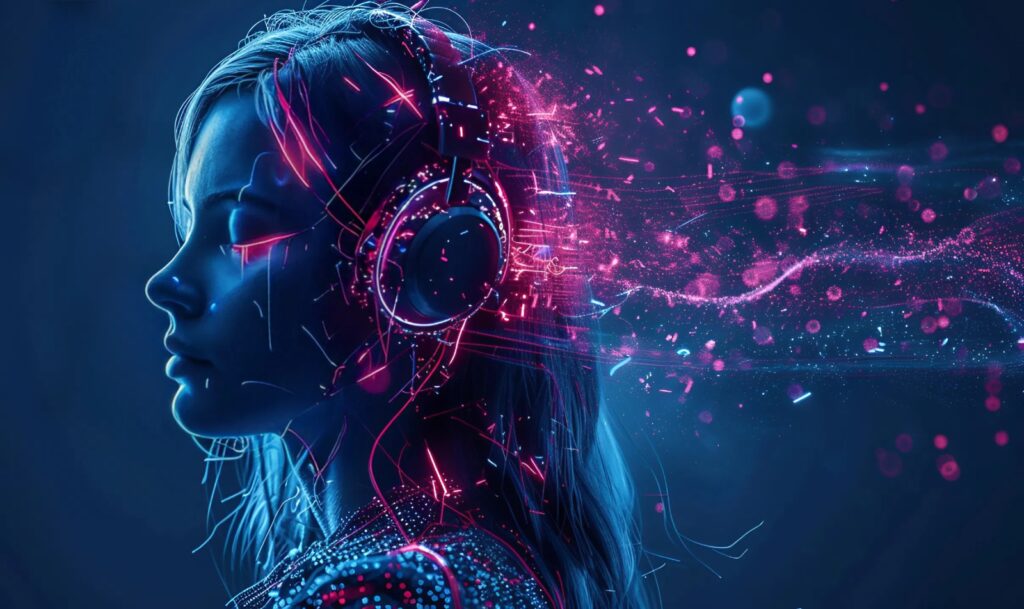
This enchanting prediction isn’t magic—though it feels like it. It’s the wonder of AI emotions at play, a testament to how far technology has woven itself into our daily lives. Through sophisticated algorithms and machine learning, AI applies digital intuition to capture emotional undercurrents.
AI and Emotional Intelligence: A Modern Love Story
AI’s attempt to dabble in emotional intelligence is reminiscent of a teenage love story—awkward yet endearingly promising. These mindful machines sift through data like a detective piecing together clues, decoding everything from daily routines to subtle behavioral cues. Platforms like Spotify, Amazon, and Netflix harness AI empathy to customize experiences based on our unique preferences. It’s akin to a dear friend recommending a movie because they know how it touched their hearts.
Yet, AI emotional intelligence isn’t without its shortcomings. Picture having a conversation with a chatbot: “How can I help you?” it asks, only to misinterpret your request for help with “play” as a desire for fast-tempo tunes. It’s like asking a toddler to fetch the news; you never quite know what you’ll get.
The Journey of Digital Intuition
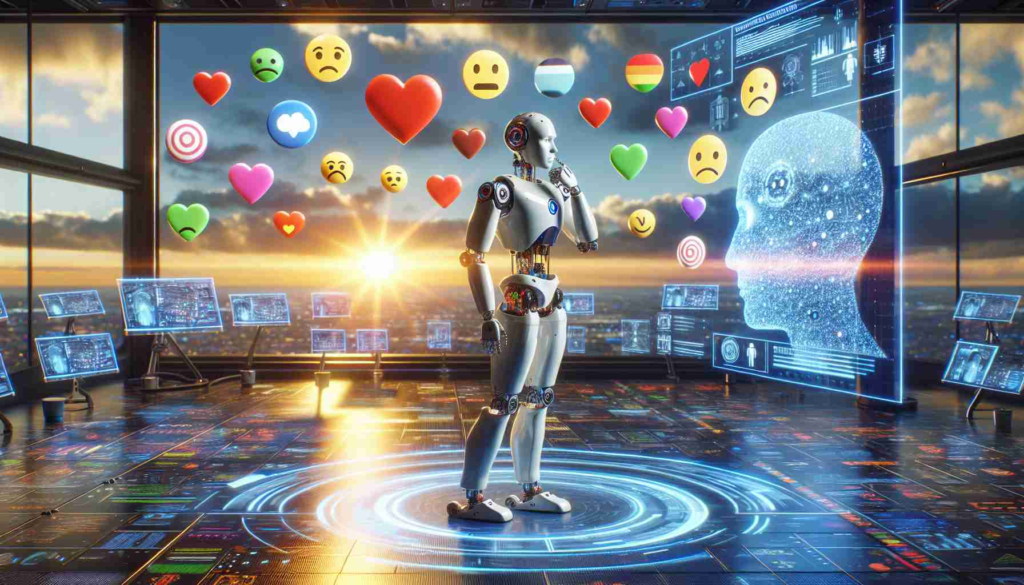
The journey of AI towards emotional intuition mirrors a clumsy toddler taking its first steps—falling here and there but steadily improving. We now have machines capable of emotion recognition through image and voice data. They distinguish smiles from frowns in photos and can even tell if the feedback tone is glowing or grumpy.
Real-world applications of these emotion-recognition tools stretch from chatbots to virtual assistants. Ever noticed how virtual assistants improve at recognizing your sarcastically high-pitched “Great!” during a Boris meeting? They’re learning! Like your coffee machine hulking over judging your beverage errors, these tools aspire to offer heartfelt solutions by understanding our emotions.
Where AI Falters: Beyond Codes and Calculations
As sophisticated as AI empathy systems may seem, there’s still an unmistakable gap. When superficial algorithms attempt to replicate emotions, they stumble. Unlike intuition in humans—an instinctive leap that melds emotions with experience—AI’s deductions remain extensions of calculations, however complex.
For instance, AI might miscalculate your happiness levels if it misses the context. Imagine it queues an upbeat ’80s track for your wedding anniversary, drawing inspiration from earlier playlists. Despite the good intention, it misses the emotional depth of choosing a song linked to your first dance. We smile at these faux pas because they reveal the charming limitations of mindful machines trying to emulate human complexities.
A Peek into Tomorrow’s Harmony of AI Emotions
As we anticipate future innovations, how close are we to AI composing original playlists based on non-verbal cues, much like a DJ with a sixth sense? Perhaps soon, our devices will possess nuanced understanding, much like therapists, predicting emotional undercurrents before we do.
Yet, we’re reminded that like any learning curve, it’s not only about perfecting technology but about widening the scope of empathy. Many technological giants are investing in enhancing emotional connectivity, much like giving toddlers tools to forge deeper connections with playmates.
The Encore: A Harmony of Humanity and Technology
One serene morning, as I sipped my coffee without judgment from my beloved machine, my playlist transitioned effortlessly from a gentle piano riff to a lively swing number. I smiled, wondering if AI had accidentally captured the essence of my mood—contentment with just a sprinkle of hope for the day.
As our digital companions gradually hone their intuition, they may never truly decipher our hearts. But the quest for AI emotions continues to bridge the gap between technology and the human experience. Perhaps this journey, replete with heart, humor, and a dash of unpredictability, is precisely what makes this blend of humanity and technology so fascinating.
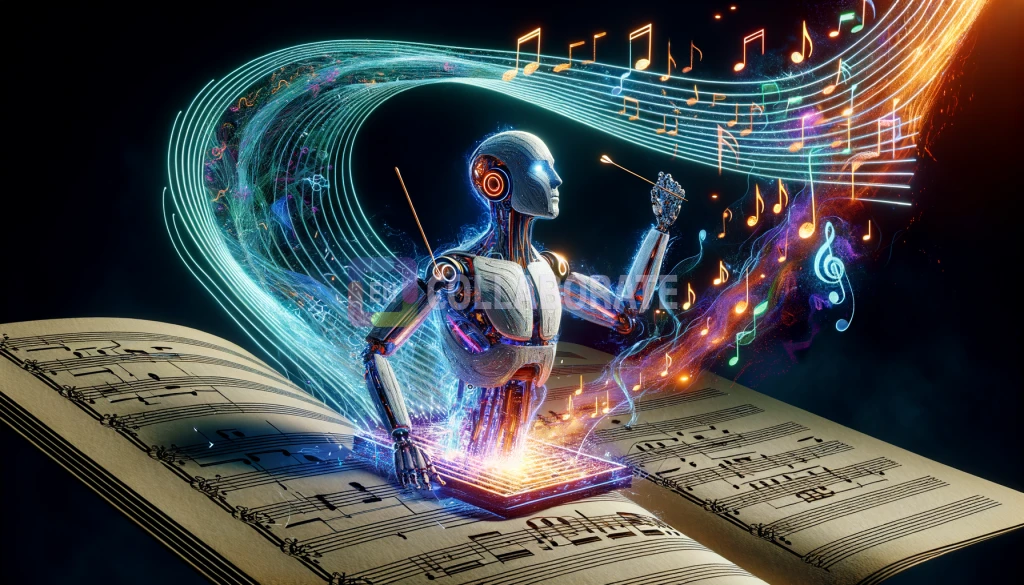
In the ever-evolving ballet between humans and machines, let’s cherish these charming booboos that remind us of the emotional tapestry only we can fully understand. Who knows, maybe in the process we become not just spectators but active conductors guiding this digital symphony.
Until then, here’s to more laughter-inducing AI blunders and playlists intuitively attuned to our every mood chord. Cheers to the fascinating journey ahead!