The Rise of AI Tutors: Are They Redefining How We Learn?

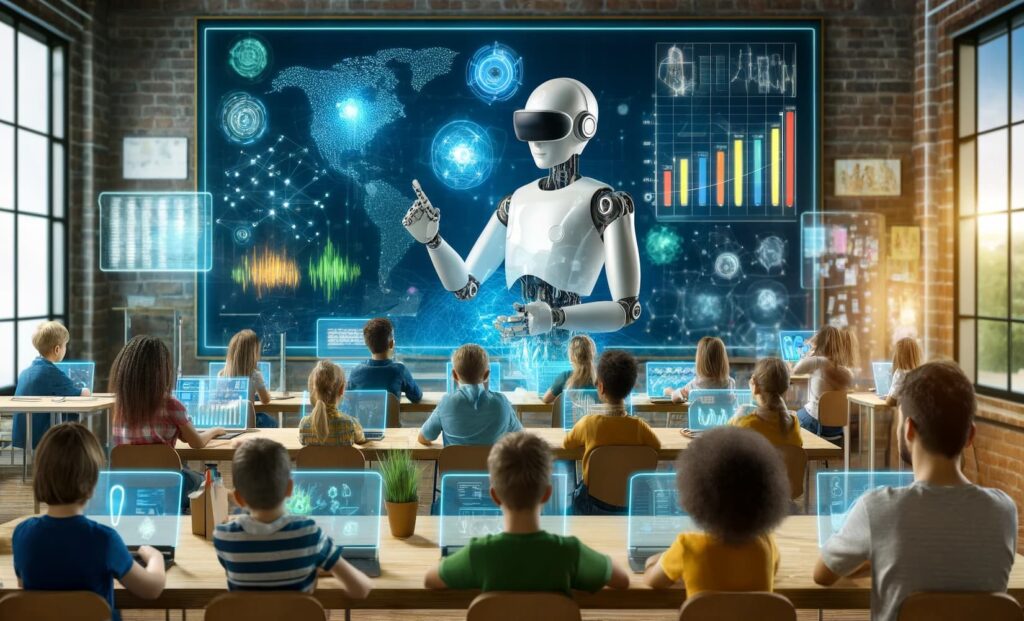

The Rise of AI Tutors: Are They Redefining How We Learn?
Introduction: A Glimpse into the Future Classroom
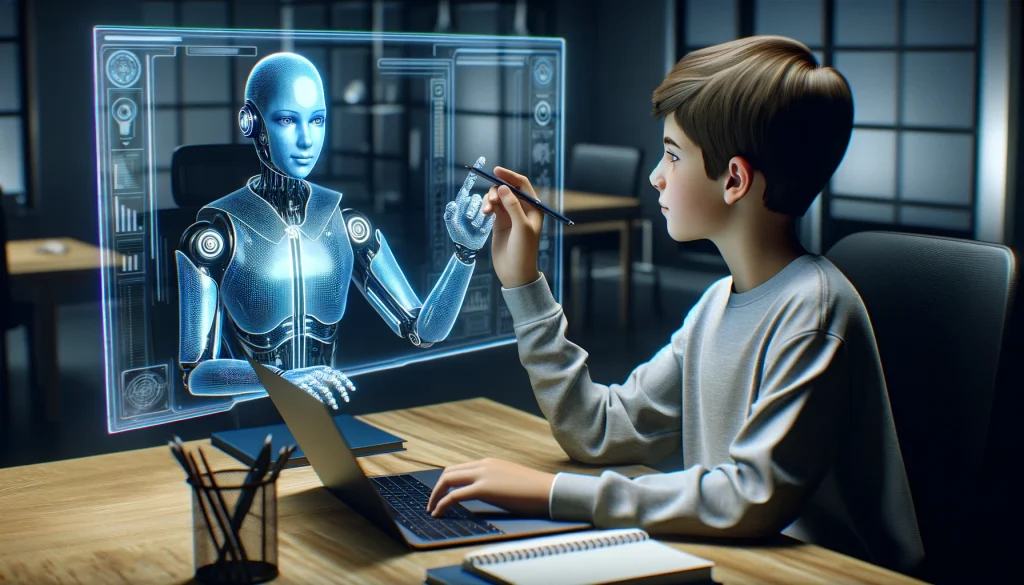
Imagine this: You’re sprawled out on your living room couch, cup of coffee in hand—while your virtual tutor, an AI named Alex, calmly reviews your algebra woes. Yes, even with numbers, Alex has infinite patience and never so much as rolls a digital eye. Yet why is it that even amidst this sci-fi scenario, there’s camaraderie? Perhaps it’s because Alex, unlike the barista who silently sighs at your daily triple shot requests, listens without judgment and meets you exactly where you are. This isn’t just a fever dream fueled by too much caffeine; it’s the evolving reality of AI tutors in education.
The Emotional Connection: Adding Humanity to Machine Learning
When it comes to education, one might ask: Can a machine with wires and code really understand my emotional despair when faced with long division? While our coffee machines still offer no sympathy for burnt toast, AI is surprisingly learning to connect emotionally—or at least simulate it convincingly. Thanks to advances in emotional intelligence AI, these mindful machines are better at recognizing and responding to human emotions than ever before. This understanding helps create a more personalized and responsive learning experience.
Take AI-driven platforms and bots like Socratic, a tool some students consider their “virtual buddy.” By using natural language processing, these intelligent systems identify when a student is confused (cue the same expression you give your GPS when it tells you to turn left… into a lake) and adjust their teaching strategy accordingly. It’s like having a teacher who acknowledges when your brain goes on a strike.
Progress and Pitfalls: AI Through the Looking Glass
The soaring potential of AI tutors is undeniably transforming education. Imagine finishing a lesson plan designed just for you, complete with encouragement right before you slip into self-doubt. These AI empathy-driven systems make that possible, creating a world where learning is not only more efficient but emotionally adaptive.
Nevertheless, there’s still some software beneath the hoodie. Despite their ground-breaking advances, AI systems aren’t perfect. They lack the parental wisdom to tell you “just because you can, doesn’t mean you should”—something vital when deciding whether to skip your homework. Current AI tutors may stumble when emotions get too complex, akin to asking your Roomba what it thinks of existentialism.
Moreover, while AI has shown it can become emotionally sensitive, it’s still missing facets of human reasoning and cultural understanding. Can a digital entity fully appreciate the nuances of a Shakespearean sonnet, or provide comfort during life’s hardest lessons? The road to AI wielding true emotional depth could be a long one. But hey, even Rome wasn’t built in a day—and certainly not by AI, unless you count talking about blueprints with Siri.
Real-World Examples: AI in Action
In the realm of education, the impact of AI tutors is already visible across various platforms. Companies like Squirrel AI in China and Carnegie Learning in the U.S. are leading the wave of AI-driven personalized education delivery. Virtual assistants such as Alexa are serving as companions in many households, albeit ones that occasionally respond to uncalled “Hey Alexa” during comedy shows with confused concern.
These AI tutors are using emotional analytics to understand when students are losing motivation. Imagine tracking your mood as precisely as your smartwatch tracks your steps—without guilting you for that extra slice of pie, unlike some health apps.
The Dual Nature of AI: A Tool or a Tutor?
AI’s journey in education prompts an existential musing: Are these emotion-savvy novelties merely tools, or are they redefining what it means to be a tutor? While serving up shortbread recipes and providing algebra assistance, AI straddles the fence of teacher and tool—one algorithm at a time.
It’s worth pondering whether these AI companions will replace traditional classrooms or merely augment them. Perhaps they’re the sidekick to the superhero that is experiential learning, rather than the protagonist. After all, even the most proficient AI-AI didn’t go to college… and it’s not saving us from the vegetable-themed TikTok challenges any time soon.
Conclusion: The Future Unwritten
So, are AI tutors truly redefining how we learn? Picture this: AI diligently by your side, making learning more personal, accessible, and possibly less dreadful. Yet the charm of human touch and the ability to understand complex emotional cues still holds power in our learning journeys. While AI may enhance the educational landscape, it’s not here to erase the human-to-human fabric that each of us finds irreplaceable (unlike yesterday’s leftovers now coated in freezer burn).
In reflecting on whether AI tutors are revolutionaries or mere assistants, perhaps we stand on the brink of a collaborative sequel—where humans and AI team up for a blockbuster of an educational experience. As we sip our cups of (unjudged) coffee and plot the course of our learning futures, one thing’s for certain: The future of education, much like AI’s emotional intelligence, is an adventure evolving before our eyes.