Can Machines Master Human Emotions? Exploring the Ethical Impact of Emotional AI


Can Machines Master Human Emotions? Exploring the Ethical Impact of Emotional AI
Snooze Button on Feelings? Not Anymore
Picture this: you’ve just received a text that makes your blood boil. What if your phone could immediately detect your fury and suggest a playlist to calm you down? Sounds like something out of a sci-fi movie, right? Well, the future might not be too far off. As of March 2026, emotional artificial intelligence is making leaps and bounds, promising not just to recognize, but also to understand and even emulate human emotions.
A real game-changer in the world of Emotional AI has just emerged from MindSense Labs, a company rapidly climbing up the tech innovation charts. MindSense has introduced AuraMind, an AI system capable of understanding subtle emotional cues from human speech patterns, facial expressions, and even text messages. This breakthrough has sparked immense debate in both the tech arena and ethical circles, offering prospects as thrilling as they are unnerving. Let’s dive into how this is rocking the AI scene.
MindSense’s Bold Leap: AuraMind’s Emotional Intuition
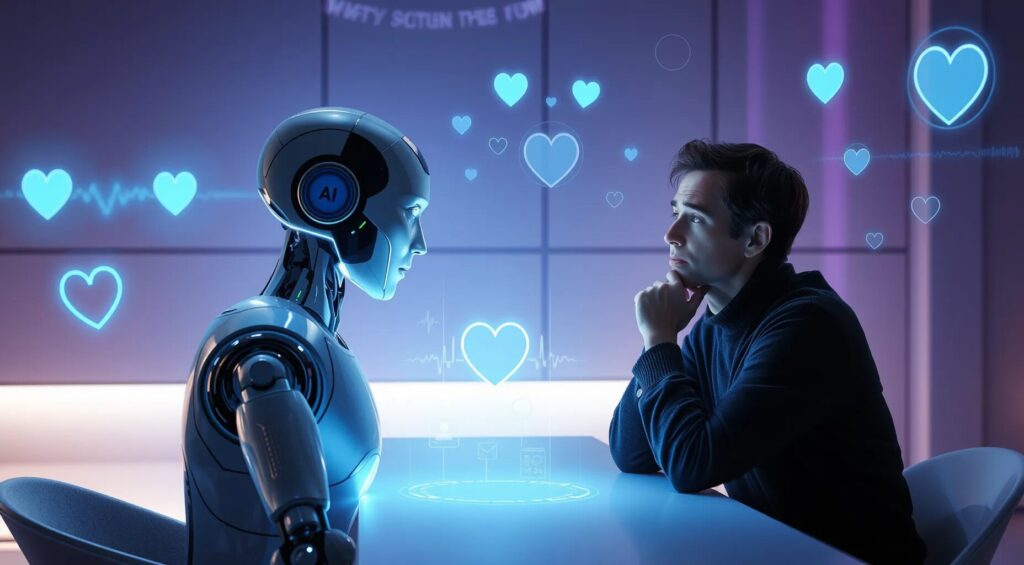
MindSense’s recent unveiling of AuraMind at the AI Expo in San Francisco has been the talk of the tech town. AuraMind distinguishes itself by not only identifying emotions from various cues but by responding in a manner that mirrors human empathy. Imagine an AI that listens like a therapist and offers advice akin to your most understanding friend—AuraMind aims to do just that.
The excitement stems from this system’s prowess in real-time emotional analysis. Whether you’re a content creator seeking to gauge your audience’s reaction, a business aiming to improve customer service experiences, or just someone wanting their personal assistant to ‘get you’, AuraMind’s ability is a quantum leap towards more intuitive AI interactions. By processing emotional signals through sophisticated neural networks, MindSense has crafted an AI that learns and evolves with each emotional interaction, tailoring its responses to align with individual emotional profiles.
This has implications for industries like healthcare, customer service, and entertainment. Tech giants like Google DeepMind and Meta AI, known adversaries in the AI race, are reportedly sharpening their own emotional AI strategies to leapfrog into this emotionally-charged frontier.
Why You Should Care: Emotionally AIttached?
Emotional AI isn’t just about machines being “in their feelings”; it could genuinely change everyday life. Think better virtual meetings with AI capable of sensing participant engagement levels or personalized mental health resources that adapt to your emotional state without you needing to say a word. For students, this technology can revolutionize e-learning tools by dynamically adjusting to a learner’s feelings, boosting motivation and performance.
Businesses eyeing to revolutionize customer service are already assessing how emotional AI can refine user experiences, turning dissatisfied customers into brand advocates with more empathetic responses. And let’s be honest, wouldn’t it be nice if your smart home assistant could sense your Monday morning dread and automatically brew your favorite coffee blend?
Treading New Ground or Opening a Can of Worms?
While the idea of emotionally intelligent machines brings about thrilling possibilities, it also poses ethical questions. How much emotional data is too much, and who really owns that information? The debate around privacy in AI is heating up, with experts cautioning against the potential for emotional surveillance. The prospect of misuse looms large, especially if personal data falls into the hands of advertisers or, even worse, authoritarian regimes.
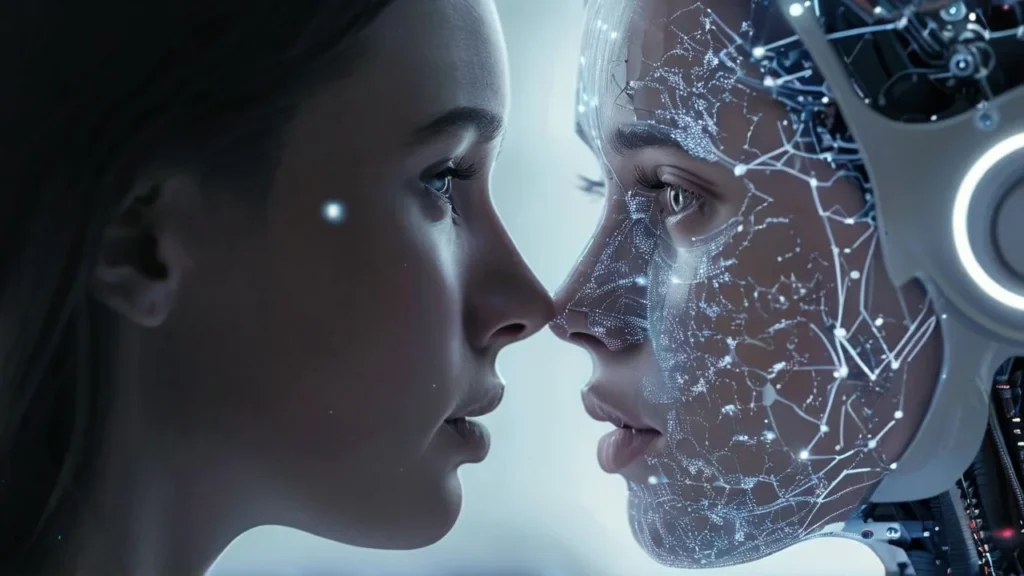
This development raises questions about the nature of human-machine interactions in the long run. Could machines become so adept that distinguishing them from humans in emotional contexts becomes challenging? Additionally, the social impact, such as how this might affect human relationships in an increasingly machine-interactive world, is prompting philosophical debates and policy discussions across the globe.
Wrap-up: The Heart of the Matter
In a world where machines start grasping the intricacies of our emotions, we are treading a delicate path. Are we equipping ourselves with tools that enhance our lives, or are we opening pandora’s box of privacy dilemmas and emotional dependency? As AuraMind grows and the tech industry races to keep up, we’ll have a ringside seat to this emotional rollercoaster in AI evolution. So next time your emotional AI assistant suggests a calming tune, you might want to play it—after all, it’s just trying to understand “AI-right”?