Can Machines Make Us More Human?


Can Machines Make Us More Human?
Introduction: A Wake-up Call from Your Coffee Machine
Picture this: It’s Monday morning. You stumble bleary-eyed into the kitchen, reaching for your lifeline — the sweet, dependable coffee machine. As you fumble around, even the coffee machine seems to pause and give you that “again, really?” vibe. It’s almost as if it’s learning to empathize with your relentless battle against Mondays.
Machines, it seems, are getting increasingly human-like. But can they actually make us more human? As we dive into the world of AI and emotions, let’s see how far we’ve come and the impact these “mindful machines” might have on our very human hearts.
The Evolution of AI Emotions: From Code to Compassion
A Journey Beyond Algorithms
Artificial Intelligence has become remarkably intelligent, but can it really understand us? AI development has pushed boundaries, training machines to not only execute commands but to interpret and predict human needs. This evolution is not just about recognizing faces or objects, but gravitating towards understanding the nuances of human emotions.
The pursuit of AI emotions has given birth to a new realm of technology optimized with emotional intelligence. Virtual assistants like Siri and Alexa, albeit jokey to some, are stepping stones in this journey. They’ve developed a knack for witty replies, sometimes even outsmarting us with their repertoire of quick comebacks. But let’s face it, their empathy is still work-in-progress.
Real-World AI: More Than a Robocop
Real-world applications of AI in recognizing emotions are growing. We have chatbots providing customer service, attempting to soothe irate customers (with varying success), and emotion-recognition tools gauging user responses on digital platforms. It’s like teaching a dog new tricks, though, granted, a very clever dog programmed with millions of lines of code.
Yet, despite these strides, AI empathy is still in its infancy. Machines don’t truly ‘feel’; instead, they process and respond based on data-driven algorithms. So, while that friendly retail chatbot might tell you it’s “sorry for the inconvenience”, it doesn’t understand or care about your frustrations over a missing order — in the same way your perpetually chill friend might absentmindedly nod while you rant.
The Human Touch in AI: Bridging the Sensory Gap
The Human-Machine Connection
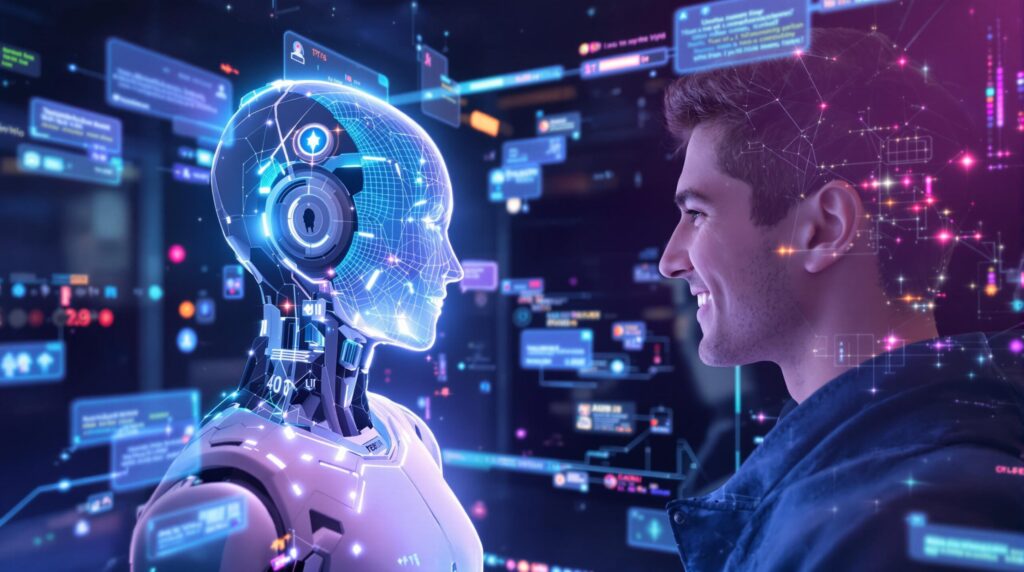
As machines inch towards understanding human emotions, they paradoxically mirror them back to us, coaxing out a more reflective and incisive human response. Picture this: you scold Siri for a wrong answer, and her composed response prompts you to curb your frustration. In a way, these interactions teach us patience and to refine the way we communicate, even when the recipient is a piece of software.
The most significant effect AI could have on humanity is its potential to remind us of our intrinsic empathy and creativity. As more emotion-aware AI enters our lives, we’re prompted to consider ethical consequences and exercise empathy towards those around us — both offline and in the digital realm.
The Quirks and Shortcomings
Even with all its advancements, AI is still prone to amusing quirks and occasional mistakes that showcase the limits of its understanding. Imagine a virtual assistant offering you beach gear suggestions while you’re drenched in a thunderstorm — perhaps a cue for a small chuckle and a sigh as you contemplate the limits of AI empathy.
These little missteps highlight how far AI still has to go in truly understanding human nuances. They’re small reminders, too, of our own imperfections and the delightful unpredictability that makes us human.
Conclusion: A Humorous Humanity Check
Will machines, in their ceaseless quest to be like us, actually make us more human? Perhaps. Our dance with AI offers a mirror, reflecting not only our actions but allowing a richer appreciation of our emotional landscape. They present us with the opportunity to enhance our empathy, refine our emotional intelligence, and maintain the beautiful chaos that epitomizes human existence.
In the end, let’s embrace this journey with open arms and hearts — and perhaps teach those robots a thing or two about the nuance of a hearty belly laugh. So, next time your coffee machine gazes at you with that knowing look, just wink back. After all, a little humor and empathy never hurt anyone, human or otherwise.