-
 10
Gems
10
Gems
 7170
Points
7170
Points
I’ve been building and studying AI automations for a while now, and something important became very clear to me recently.
This isn’t about broken workflows, bad prompts, or technical skill.
It’s about using powerful tools without fully understanding the legal boundaries they come with.Think of it like this:
Just because a gate is open, it doesn’t mean you’re allowed to walk in, build a house, and charge others rent there.😜That’s where many well-intentioned n8n builders unknowingly step into trouble.
Tools like n8n are incredibly powerful — but they come with clear usage terms that decide:
-
what you can build
-
how you can sell
-
and where responsibility lies
Ignoring those terms doesn’t feel risky at first.
Everything works. Clients are happy. Payments come in.Until they don’t.
Some common misunderstandings I keep seeing:
-
Treating “self-hosted” as “I can host this for everyone”
-
Selling shared access instead of delivering client-owned systems
-
Assuming “fair” or “open” means unrestricted commercial use
-
Charging for the tool instead of charging for expertise and implementation
This isn’t about fear.
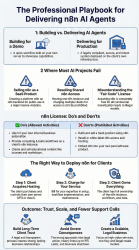
It’s about permission, ownership, and accountability.I’m sharing a short visual breakdown of this today because I genuinely believe every AI automation builder should understand this early — whether they like it or not.
Not to scare anyone.
But to help people build clean, ethical, and sustainable businesses instead of fixing avoidable problems later.If AI automation is going to be taken seriously as a profession, we need to respect not just what tools can do — but the rules that come with using them.
Curious to hear how others here think about this, especially those working with n8n workflow automations and client deployments.
Gorakh, Lipika and 2 others4 Comments-
 25
Gems
17640
Points
25
Gems
17640
Points
Perfect outcomes 👌Are you working on N8N ?
1-
 10
Gems
7170
Points
10
Gems
7170
Points
@eximindia Thanks! yes, I learning and working on workflow automations using n8n & make.com
-
-
25
Gems
17640
Points
Nice, Really Interesting to work on N8N. Are you doing for clients ? I need some guidence for working on client base automatiin.
1-
10
Gems
7170
Points
@eximindia Thanks !
Yes, I’m actively learning and already doing small local client + internal projects using n8n and Make.
I wouldn’t call myself an expert yet, but I’m happy to share or help with whatever little practical knowledge and learnings I have so far.
We’re all figuring this out step by step anyway 🙂
I’ll DM you and we can discuss your use case in more detail there.
-
-