Can Machines Truly ‘Listen’ and Respond Like Humans?


Can Machines Truly Listen and Respond Like Humans?
Imagine waking up groggy and under-slept. You stumble into the kitchen, and the first thing your espresso machine does is blink a light that feels a lot like disdain, reminding you once again, “Coffee before talkie.” Whether it’s your grumpy coffee machine, the GPS that passive-aggressively recalculates routes when you miss a turn, or the voice assistant who knows way too much about your shopping habits, we’re surrounded by machines that appear to know us better and better each day. But here’s the burning question: Can machines truly listen and respond like humans?
Living with Machines: A Modern Folktale
Picture this: You’re having a not-so-great day. Your job, your chores, everything feels, well, relentless. Why not talk it over with Alexa, right? So, you spill your heart out. She politely suggests a list of local mental health professionals. Helpful, sure, but it doesn’t feel quite like what a human friend would do. Because can Siri or Alexa truly give us the empathy we seek? Well, not yet.
The Quest for AI Emotions
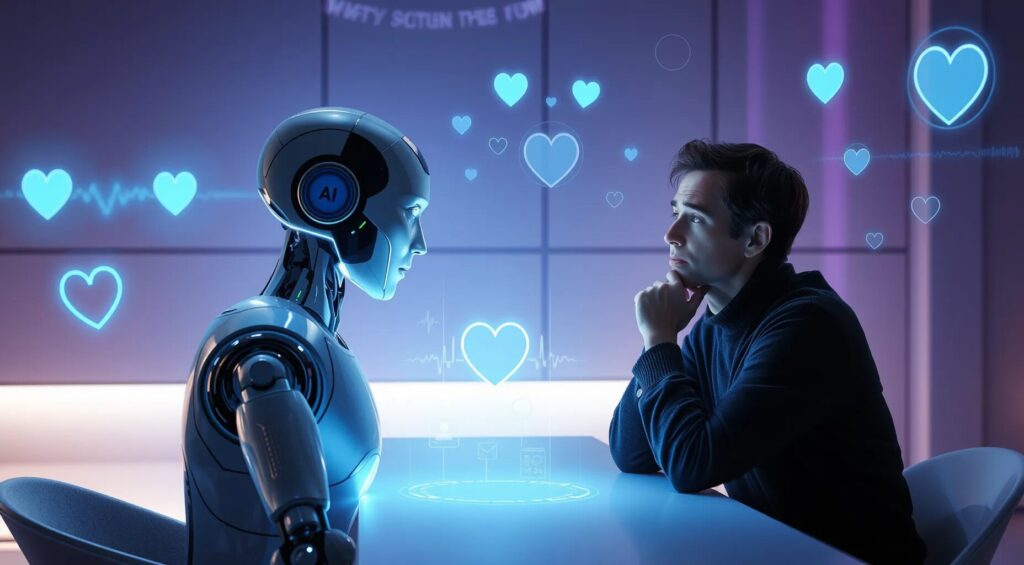
The journey to make machines truly listen starts with understanding emotions. Emotional intelligence, the ability to perceive, understand, and manage emotions, is second nature to humans (though some of us could use a refresher course from time to time!). For machines, the road is a little rockier. AI emotions refer to the capability of a machine to process emotional input to “react” or “respond.” But can they feel? Well, here’s where things get a bit tricky.
At the Crossroads of Mindful Machines
Consider the chatbots that pop up to assist with our shopping or inquiries. These digital helpers are becoming increasingly sophisticated, designed to understand context and nuance. Companies are pouring resources into developing AI empathy — technology intended to mirror the nuances of human response. However, while some chatbots have been trained with more than just “Yes, no, and I’ll check on that,” it’s crucial to remember they are not sentient.
Imagine trying to teach your pet goldfish to solve a Rubik’s cube — AI machines are a bit like this fish, performing tasks through extensive programming but without truly understanding the emotional weight behind those actions. They lack consciousness, a pivotal component in truly listening and responding like humans.
Real-World Applications: How Far Have We Come?
1. Virtual Assistants: From Siri to Google Assistant, these nifty programs can answer questions, set reminders, and even have weather-based small talk. But when it comes to deeper emotional intelligence, they fall flat, like trying to pour a cup with the lid still on.
2. Chatbots and Customer Service: These have come a long way, utilizing natural language processing to create more fluid and intuitive interactions. However, they can still operate like those “choose your own adventure” books we read as kids — limiting you to a set number of responses and often missing the point entirely.
3. Emotion Recognition Software: Emerging tools can analyze facial expressions and voice tones to gauge emotional states. It sounds a bit like science fiction, but there’s still substantial work to be done to refine these technologies so they’re less likely to misinterpret an over-baked grin as true happiness.
Room for Improvement: What’s Still Lacking?
While advances are noteworthy, machines lack the innate understanding of context that humans naturally possess. If you’ve ever seen someone cry while insisting, “I’m fine,” you’ll know a machine would take those words at face value. The road to creating mindful machines is still full of bumps, primarily because understanding human emotion involves empathy, intuition, and contextual intelligence, which are distinctly human traits.
The Humorous Side of Emotionally-Naive Machines
Let’s face it; our interactions with AI are often a comedy of errors. We’ve all yelled at a voice assistant for playing a completely different artist than requested, or laughed when a chatbot’s attempts at understanding goes sideways. It’s like when a toddler earnestly repeats a curse word — adorable, a little misguided, and fundamentally aware it’s missing the mark.
Conclusion: The Future Isn’t Set in Stone
As we navigate this ever-evolving landscape, the potential growth in AI technology is exciting. The dream of machines truly possessing AI emotions and delivering empathetic responses might not be far off. Still, those genuine human connections will likely remain irreplaceable. For now, as we enjoy the humor and quirks of our digital companions, let’s appreciate the irony in AI’s ever-growing role in a society that is quintessentially human.
So next time your smart fridge offers a recipe for salad while you’re eyeing that leftover cake, remember — it’s trying its best! After all, aren’t we all just learning to be better in this giant, wacky algorithm called life? 😊