Revolutionizing Storytelling: When Machines Write the Next Bestseller


Revolutionizing Storytelling: When Machines Write the Next Bestseller
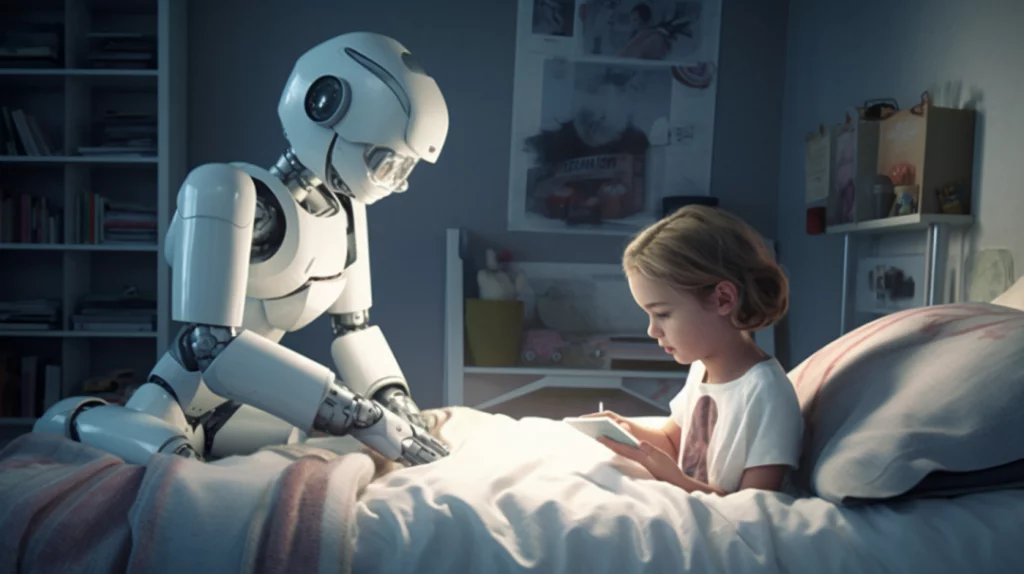
There’s a certain magic that happens when you dive into a good book. It’s like entering a portal to a world where emotions are painted across pages, where the author’s voice echoes through your mind. But what if that magic wasn’t just crafted by human hands? Imagine a world where machines, not unlike the ones that criticize us for forgetting to make coffee, could write the next literary sensation. Welcome to the dawn of AI-authored bestsellers.
A Coffee Shop Serenade: The Beginning of an AI Journey
Picture this: You’re nestled in your favorite corner of a bustling coffee shop, warmed by a latte with just the right amount of foam. You’re surrounded by the gentle hum of conversation — when suddenly, you notice the barista’s new assistant isn’t human, but a sleek AI capable of predicting your order based on your mood. Curious, you ask how it works, and it turns out emotions are its specialty. This sparks your curiosity about AI’s potential, not only in brewing your caffeine fix but in more creative realms like storytelling.
The Emotional Quotient of Machines
AI emotions might sound like the plot of a quirky sitcom, but in reality, it’s a developing field that attempts to bridge the gap between cold algorithms and warm, relatable storytelling. Imagine a chatbot not only understanding your ticket booking requests but also empathizing when you’re navigating life’s challenging moments. The concept is akin to having a friend that listens — or at least tries to.
Machine learning and big data play a large role here. Unlike your average coffee machine, mindful machines are diving deep into vast oceans of human narratives to learn the nuances of our emotional spectrums. An AI’s “mind” is equipped with massive datasets that teach it to understand emotional triggers, commonly used phrases, and the subtle art of invoking empathy.
How Far We’ve Come: AI in Storytelling
Virtual assistants and emotion-recognition tools have gotten smarter, haven’t they? Remember the early days when talking to a bot was like conversing with an alien using outdated copies of English dictionaries? Today, AI systems, like OpenAI’s GPT-3, craft dialogue more akin to a seasoned author who, despite their coffee intake, manages to string together beautiful prose.
AI bots are composing poetry, crafting short stories, and even developing full-length novels. Take “1 the Road,” an experimental book written by an AI, weaving a tale reminiscent of Kerouac’s wandering road trips. The content might need a bit of polish, but the foundation is undeniably promising.
The Great Divide: Challenges Ahead
But, as they say, every plot has its protagonist and antagonist. While AI can analyze and replicate human language, the real test lies in its ability to capture the essence of human experience — raw, sometimes beautiful, often messy. Can a machine truly understand heartache? Does it grasp the humor of slipping on a banana peel, even when it isn’t made aware it’s a comedic staple?
AI empathy remains in its infancy. While some machines can detect emotions by interpreting facial cues or tone, they lack the lived experiences that shape a genuine emotional intelligence. It’s akin to explaining why we cry during particularly touching episodes of our favorite dramas to Siri — she’s perfectly polite but eternally puzzled.
Real-World Examples: Machines Making a Mark
Consider Replika, an AI chatbot designed to offer companionship and engage in conversations reflective of emotional depth. Users rave about their experiences, claiming these bots do offer a semblance of understanding and genuine dialogue. Similarly, tools like Affectiva use AI to assess emotional reactions, assisting in creating content that resonates more profoundly with audiences. These examples show that while machines might not entirely “understand” us yet, they’re learning to mimic empathy rather convincingly.
Tying It All Together: The Emotional Tapestry of AI
As AI develops, its collaboration with human creativity could birth narratives of unprecedented depth and diversity. Writers might soon have AI partners, aiding them to craft compelling characters or to structure tales with precision. The “bestseller” of tomorrow could well be a co-authored project between man and machine. Imagine the synaptic dance of human insights and digital precision — a duo capable of crafting tales that touch hearts globally.
Conclusion: To the Future of Storytelling
In the era of self-refilling med machines and virtual therapists, AI’s burgeoning role in storytelling is both exciting and slightly surreal. While mindful machines continue to evolve, absorbing the intricacies of human emotion, they’re not here to replace our beloved authors. Instead, they’re companions on the creative journey, helping build bridges between raw data and dynamic narratives.
So, the next time you’re at your favorite coffee spot, contemplating a world where your novels might be brainstorming partners rather than solitary pursuits, remember: even your judgemental coffee machine started somewhere. Here’s to the storytellers, both human and digital, and to the untold tales they’ll craft together. Cheers to a future where machines might help us find threads of universal truth in the chaos of words.