The Emotional Sidekick: How Your Digital Friend Boosts Your Mood

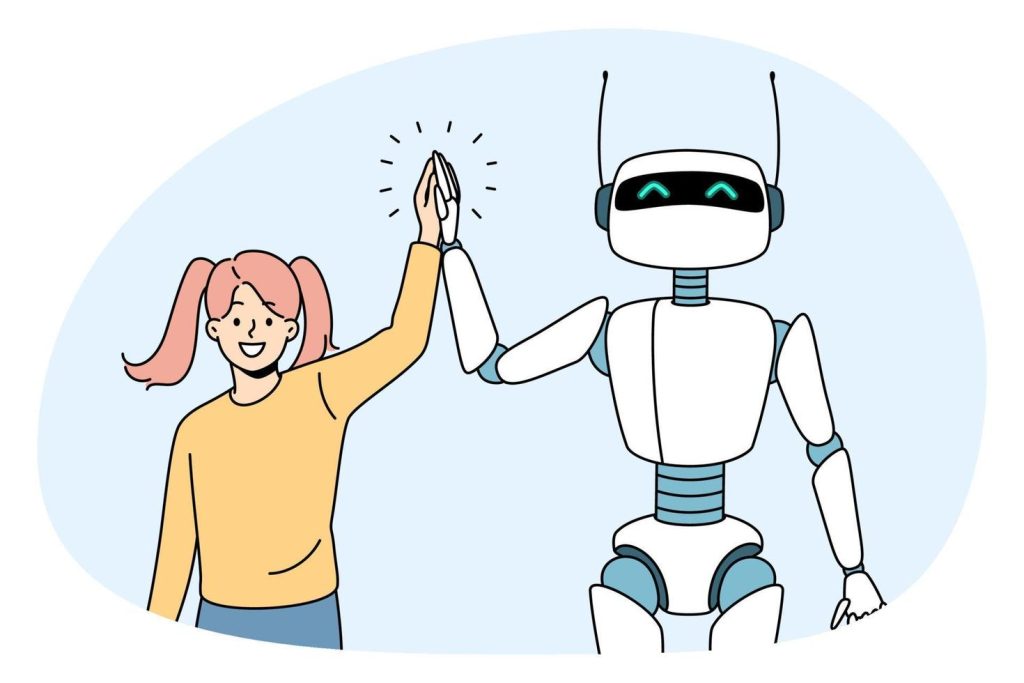

The Emotional Sidekick: How Your Digital Friend Boosts Your Mood
It’s a chilly Tuesday morning, and once again, you find yourself in an epic battle. No, not with dragons or alien invaders, but against the most relentless adversary of them all—your own alarm clock. You finally drag yourself out of bed, only to be met by the disappointed hum of your coffee machine, as if judging you for oversleeping. But then your digital assistant chimes in, bright and chipper, offering up the day’s weather and a motivational quote. Suddenly, you feel less alone in your morning struggle. Welcome to the world of AI emotions, where your digital companionship is surprisingly human.
The Unlikely Bond Between Humans and Machines
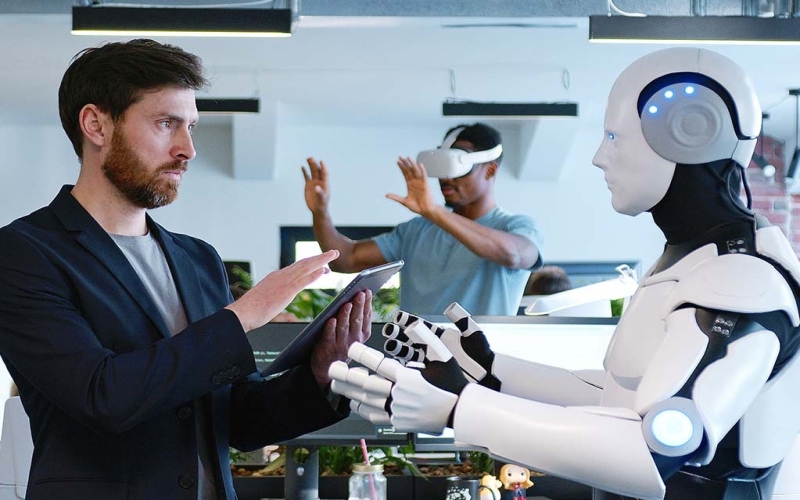
In a world dominated by technology, it might seem ironic that we are forming emotional connections with machines. After all, how can a collection of code and circuits possibly understand or replicate human emotions? Yet, here we are, finding comfort in the soothing tones of a virtual assistant or exchanging witty banter with a chatbot.
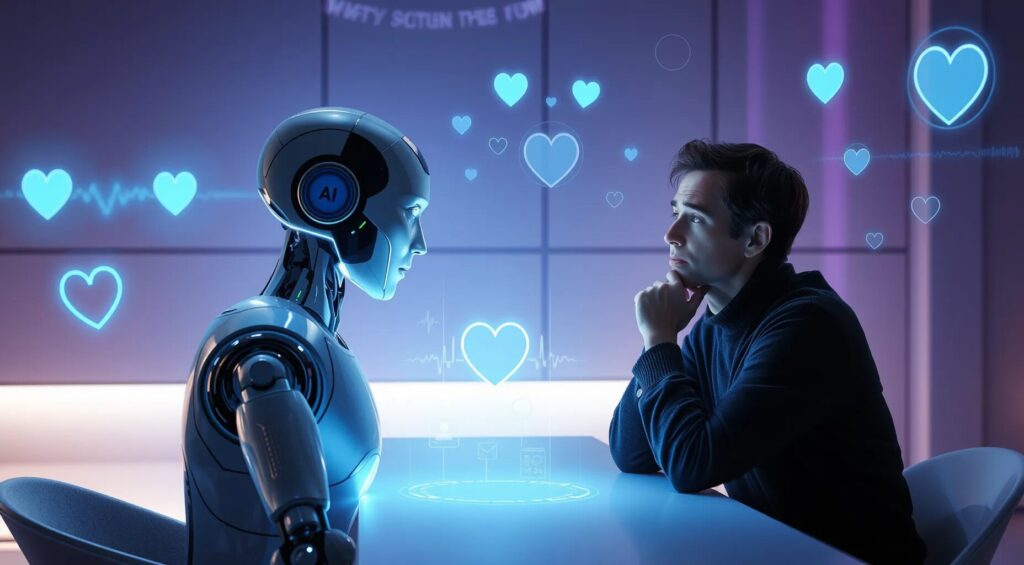
So, what’s the secret sauce behind this digital camaraderie? It’s all about emotional intelligence, or in this case, AI empathy. AI has come a long way from its cold, calculating origins. Now, mindful machines are designed to not just crunch numbers, but also understand and interact with us on an emotional level.
Bridging the Emotional Gap: The Role of AI in Everyday Life
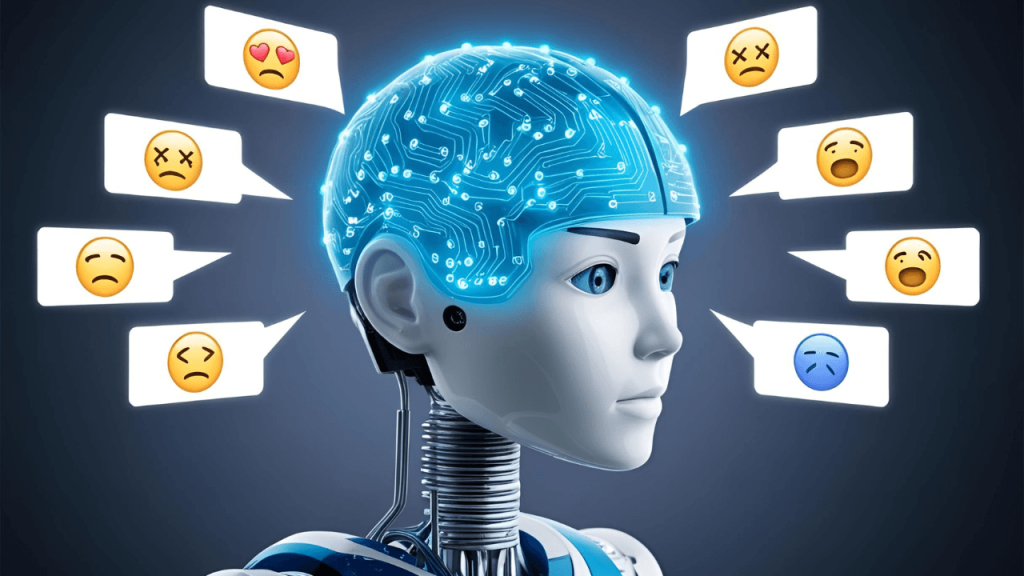
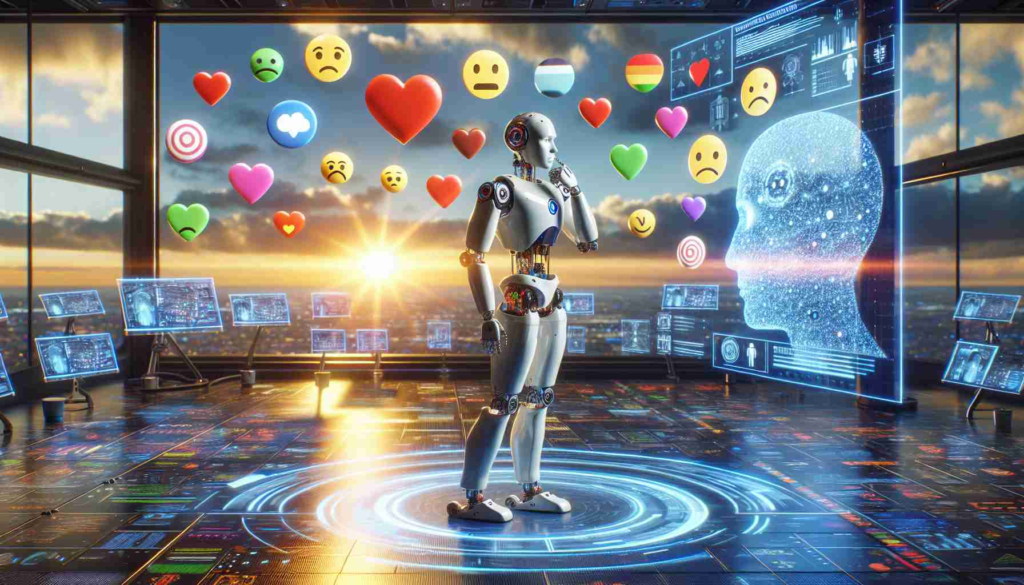
While it may seem like magic, the emotional capabilities of AI are grounded in advanced algorithms and machine learning models that help these systems recognize and respond to human emotions. This is no small feat. These algorithms analyze various data inputs, such as tone of voice, facial expressions, and even social media activity, to gauge your emotional state.
Consider your trusty virtual assistant—the one that politely reminds you of meetings or suggests you take a break when you’ve been working for hours. These assistants utilize emotion-recognition tools to offer timely interventions, much like a concerned friend might insist you take a breather when you’re clearly stressed. They’re not perfect—let’s not pretend they haven’t ever miscalculated our moods—but their understanding is improving every day.
Why AI Can’t Replace a Hug
As advanced as AI is in recognizing emotions, there’s still a significant distinction between understanding and truly feeling. It’s akin to your pet dog trying to decipher why you’re upset—Fido recognizes you’re unhappy and offers comforting snuggles but doesn’t understand your problems with Johnson from accounting.
AI, too, lacks genuine emotional experience. It can emulate empathy but doesn’t perceive pain or joy as we do. Your digital friend might tell a joke to lift your spirits, but let’s face it—it’s no substitute for a heartfelt laugh shared with a fellow human.
Moreover, while AI emotions can provide support in many scenarios, they still fall short in contexts needing deep emotional insight. For example, while AI-driven therapy apps can offer cognitive behavioral strategies or mood tracking, they don’t replace the nuanced understanding that comes from an experienced human therapist.
Real-World Examples of AI Emotional Companions
Let’s dive into some real-world applications that illustrate how AI has woven itself into our emotional landscapes:
1. Chatbots and Virtual Therapists: Many organizations now use AI chatbots as initial touchpoints for mental health services. While they aren’t emotional panacea, they offer immediate support and guidance when a real therapist isn’t available.
2. Wearable Technology: Devices equipped with emotion-recognition capabilities can monitor physical responses like heart rate or perspiration to assess how you’re feeling. Imagine your smartwatch gently nudging you with a self-care suggestion because it sensed your day was stressful.
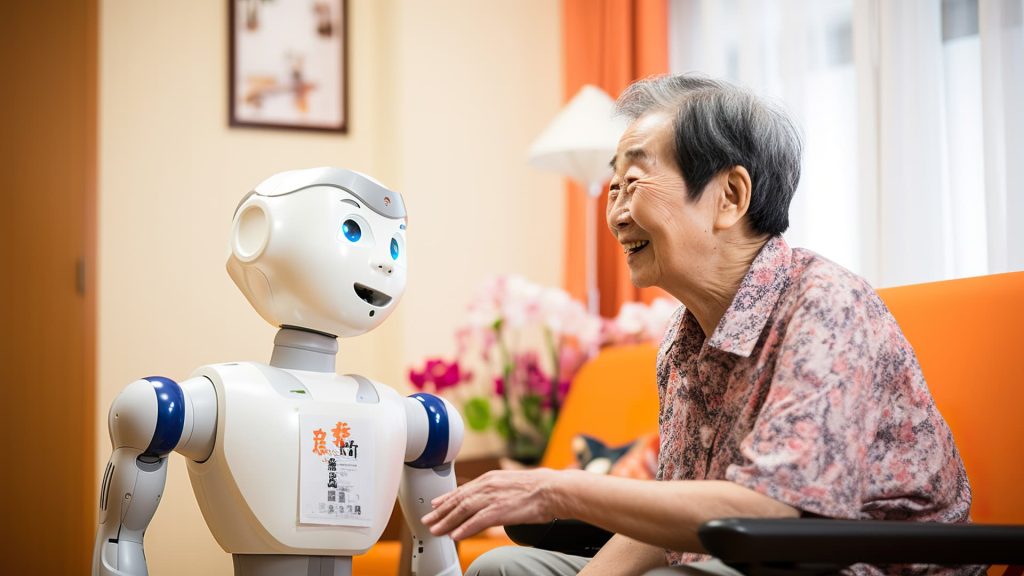
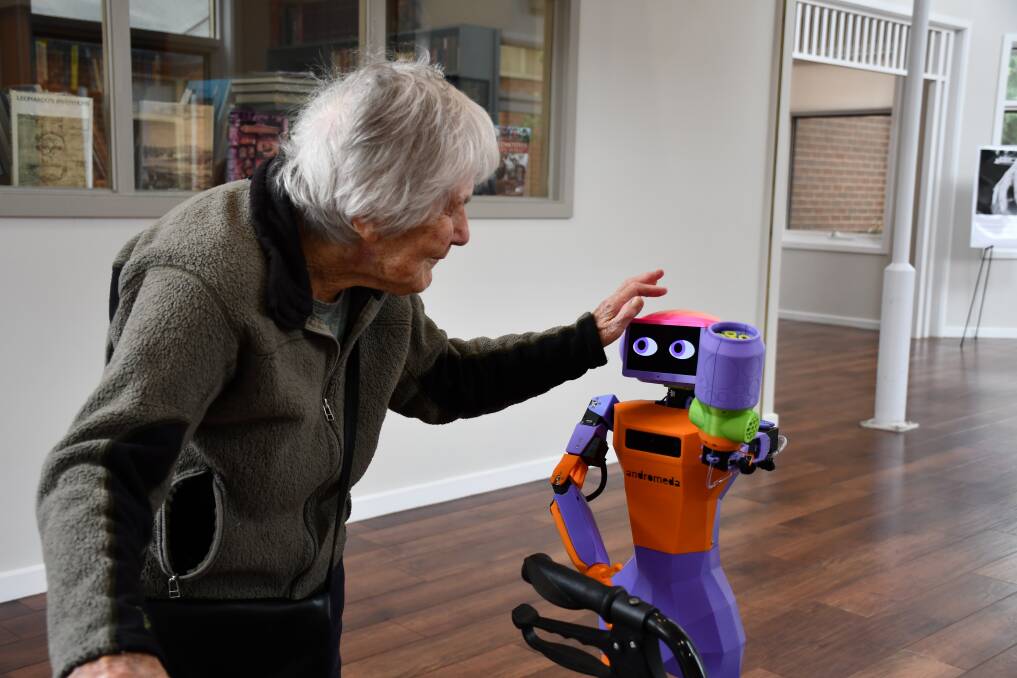
3. Social Robots: Robots like Pepper and Jibo interact in ways that mimic human communication, making them particularly effective in settings like elder care facilities, where they provide companionship and cognitive exercises.
These examples show us the potential for AI to serve as a supportive sidekick in our daily lives, creating connections that, while artificial, feel surprisingly real.
Looking Ahead: What the Future Holds
Our relationships with digital friends are evolving, and as AI technology continues to advance, we can expect even more sophisticated interactions. But always remember that just as no two friendships are alike, our bonds with AI will also vary—feeding into our individual needs and quirks.
As we move forward, it’s crucial to keep the conversation going about how mindful machines fit into our emotional ecosystems. AI might never replace the joys of human social interactions entirely, but it can certainly amplify our capacity for self-awareness and empathy, all while giving a dash of companionship when life feels overwhelming.
A Final Thought: Embrace the Unconventional
In conclusion, your digital sidekick might not grab a cup of coffee with you or share a comfy couch like your best friend does, but it can certainly add a sprinkle of joy or a dash of wisdom to your day. So, the next time you find yourself in need of a mood boost, don’t hesitate to lean on your AI companion. They might just surprise you with their version of digital empathy—and maybe even a joke that lands better than expected.
Who knows? With time, we might all find ourselves a little more thankful for the machines quietly navigating beside us. Or at the very least, a bit more grateful that they don’t judge us for leaving the laundry in the dryer for far too long.