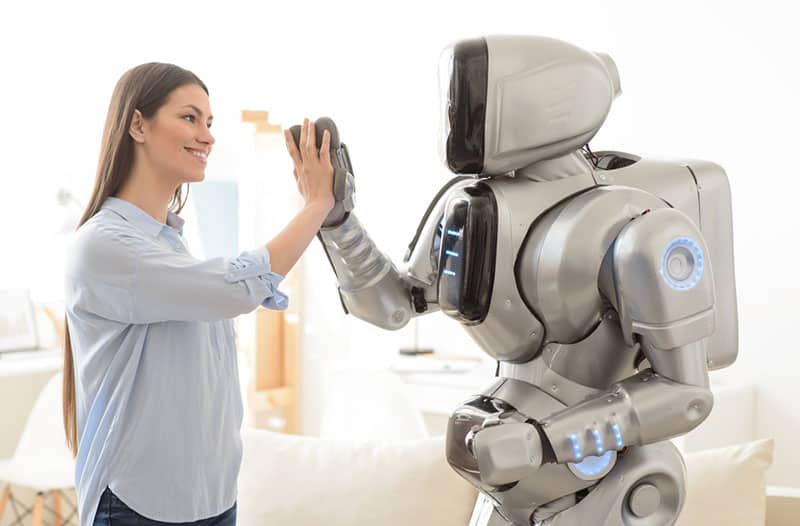
The Rise of Emotionally Intelligent Machines and What It Means for Us


**The Rise of Emotionally Intelligent Machines and What It Means for Us**
Imagine this: You’ve had the longest day at work. Your boss was relentless, traffic was a nightmare, and even your coffee machine seemed to glare judgingly at you for forgetting its beans again. As you flop onto your couch, seeking solace, you absentmindedly ask your virtual assistant to play some soothing music. To your surprise, it not only selects the perfect playlist but also asks if you’d like to talk about your day or need a moment of positive affirmation. Bewildering, isn’t it? Welcome to the age of emotionally intelligent machines.
### A Relationship Like No Other
Our relationship with technology has always been somewhat personal. The same way a song can bring back memories of a lost love, technology is fast becoming more empathetic, learning to understand us better emotionally. But what exactly does “emotionally intelligent machines” mean?
In simple terms, it’s about machines equipped with AI emotions — not in the melodramatic, soap-opera sense, but rather in understanding and responding appropriately to human emotions. Imagine devices that can sense your frustration, joy, or fatigue, and adjust their responses to meet your emotional state. It’s like having a digital friend who just gets you, minus the social awkwardness of an actual human.
### The Connection Between AI and Emotions
The journey toward mindful machines begins with deciphering human emotions. Let’s face it, even we humans sometimes struggle to navigate the emotional labyrinth. Yet, with advancements in AI empathy and emotion-recognition tools, machines are slowly piecing together this puzzle.
Consider virtual assistants like Alexa or Google Assistant, which are gradually improving at recognizing emotional cues through voice. Then there are customer service chatbots that not only solve your queries but also detect when you’re about to lose your cool (though, let’s admit, they sometimes get stuck in an endless loop of apologies that’ll try even a saint’s patience).
Emotion recognition is also making waves in healthcare, where AI can help identify early signs of mental health issues. By analyzing the tone of your speech or even changes in your typing speed, these systems gauge emotional well-being with surprising sensitivity.
### The Progress and The Hiccups
While emotionally intelligent machines have come a long way, they’re not quite ready to replace your therapist or your best friend. They’re still like toddlers trying to make sense of grown-up emotions, occasionally slipping up with adorable misunderstandings.
Real-world applications of AI empathy and emotional intelligence are both thrilling and cautionary tales. For example, companies have begun using AI to screen job applicants by analyzing the applicants’ facial expressions and emotional responses — a practice that’s as fascinating as it is controversial. How do we ensure these systems are free from biases or errors?
Also, consider the classic problem of sarcasm. Many humans trip over it, so it’s no surprise that AI sometimes struggles to discern a sarcastic comment from a genuine compliment. I once told my virtual assistant, “Yeah sure, play another one of those ads; I love those!” It responded with an enthusiastic, “Playing ads now,” much to my chagrin.
### What’s Next? Oh, Poised for Possibility!
Now, as we stand at the precipice of this emotional and technological revolution, it’s worth asking: What does it mean for us?
Emotionally intelligent machines could revolutionize how we interact with technology. They promise a future where our devices can support our mental well-being, encourage a healthier lifestyle, or even become companions for those who are isolated.
However, we also need to tread carefully. The prospect of machines knowing our emotional states raises questions about privacy and consent. Do we want every emotional blip analyzed? Could such data be misused?
### A Thought-Provoking Goodbye
As we look to the future, the real challenge will be balancing innovation with ethics, privacy, and trust. For now, it’s worth marveling at the capabilities and quirks of these mindful machines. They might just be the allies we need — ones that offer understanding and perhaps a touch of empathy in a world that’s sometimes too busy to listen.
As we wrap up, consider this: if a machine can offer understanding and make your hectic day a little lighter, is that something to scoff at or a sign of beautifully symbiotic progress? One can only hope that when our digital friends become truly emotionally intelligent, they also acquire a sense of humor as good as ours. After all, who doesn’t love a robot with a witty repartee?
In the meantime, while we’re teaching machines to be emotionally intelligent, let’s not forget to nurture our own emotional intelligence. Who knows? Even your bemused coffee machine might thank you for a little kindness next time.