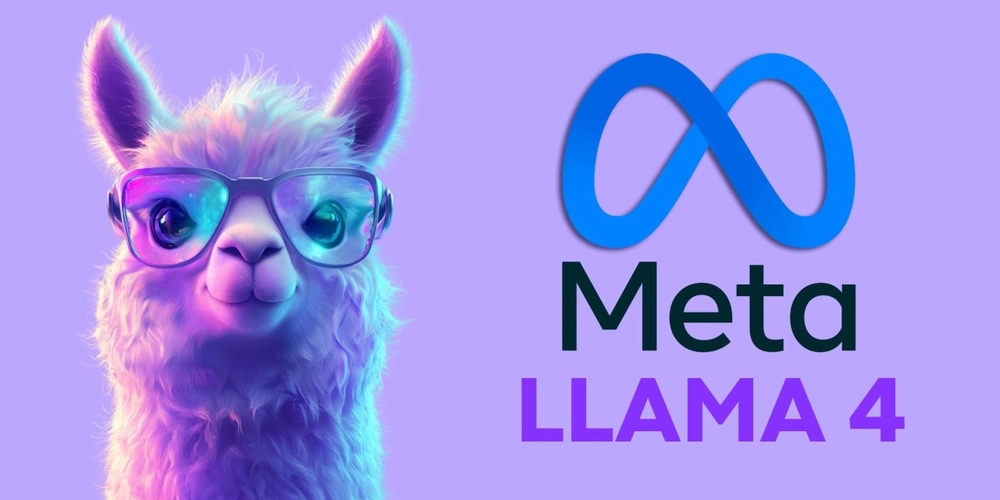
Meta Just Dropped Llama 4 — The Most Powerful Free AI Model on the Planet 🦙🔥
Free AI Model on the Planet 🦙🔥
What If the Best AI in the World Was Completely Free? 🤯🎁
Imagine walking into the fanciest restaurant in the world — the kind with a Michelin star, a three-month waitlist, and prices that make you quietly cry inside. Now imagine the chef comes out and says — “Everything on the menu today is free. Help yourself.” That’s essentially what Meta just did with the launch of Llama 4 — its most powerful AI model ever, released as fully open-source and free for anyone in the world to use, modify, and build with. 🎉
And this isn’t some cut-down, watered-down version of a good model. Llama 4 is designed to go head-to-head with GPT-4.5 from OpenAI and Gemini Ultra from Google — two of the most advanced AI models on the planet that cost money to access. Meta, led by CEO Mark Zuckerberg, is making a bold statement: powerful AI should be open and accessible to everyone, not locked behind subscription paywalls. 💪
So what exactly can Llama 4 do, why is Meta giving it away for free, and what does this mean for the rest of the AI world? Let’s get into it! 🎯

Llama 4 vs GPT-4.5 vs Gemini Ultra — Who Wins? 🥊🤖
Let’s talk about what Llama 4 actually brings to the table. Meta has built this model to compete directly with the very best closed AI models — the ones that companies like OpenAI and Google charge monthly subscriptions for. Llama 4 features improved reasoning, better code generation, stronger multilingual capabilities, and significantly better performance on complex multi-step tasks compared to its predecessor Llama 3. Early benchmarks show it performing at or above GPT-4.5 level on several key tests — which is extraordinary for a model that costs users absolutely nothing. 🏆
Open source AI is the path forward. When the world’s best AI is freely available to every developer, student, researcher, and business — that’s when AI truly starts to benefit everyone, not just those who can afford it.
— Mark Zuckerberg, CEO of Meta, May 2026 💬Meta has also moved 7,000 employees into AI-focused teams this year — a massive internal restructuring that shows just how seriously the company is betting on AI as its future. And here’s the fascinating strategic picture: Meta doesn’t make money selling AI models — it makes money from advertising. So giving away a world-class AI model for free costs Meta relatively little while simultaneously building enormous goodwill, developer loyalty, and competitive pressure on OpenAI and Google. It’s a genius business move dressed up as generosity. 😄 And frankly — for the rest of us, the result is the same: incredible AI, completely free. 🙌
How Llama 4 Changes the Game for Everyone — Not Just Developers 🌍💡
Here’s why this matters even if you’ve never written a line of code in your life. Every app, tool, and product built on top of Llama 4 becomes cheaper to build and run. That means the next wave of AI-powered tools that reach your phone, your school, your workplace, and your daily life will be more affordable — or even free — because the underlying AI engine didn’t cost the developer anything. Think cheaper AI tutors for students, more accessible AI health tools, better AI features in apps that small businesses can actually afford. 📱
For developers and startups — Llama 4 is a gift. You can now build products powered by frontier-level AI without paying per API call to OpenAI or Google. For students — you can experiment with, fine-tune, and learn from one of the world’s best AI models completely free. For businesses in developing countries — open-source AI levels the playing field, giving a small startup in Lagos or Mumbai access to the same AI power as a billion-dollar company in San Francisco. That’s genuinely transformative. 🌏🚀

The Open vs Closed AI War Just Got Very Interesting ⚔️🌐
The launch of Llama 4 intensifies one of the most fascinating debates in tech right now — should AI be open-source or closed? On one side, Meta and the open-source community argue that AI being freely available accelerates innovation, democratises access, and prevents any single company from having a dangerous monopoly on powerful AI. On the other side, OpenAI and others argue that releasing powerful AI openly is risky — that bad actors can use it for harmful purposes without any guardrails. 🤔 Both arguments have genuine merit, and this tension will only grow as AI models become more capable.
Meanwhile, researchers at the University of Pennsylvania have created a hybrid light-matter particle that could dramatically speed up AI computing while using far less energy — a scientific breakthrough that could eventually make running models like Llama 4 even cheaper and more efficient. The combination of open-source AI and better hardware could put genuinely powerful AI into the hands of billions of people within the next few years. And that, depending on how we handle it, could be either the best or the most complicated thing that’s ever happened. 👀
The Best AI Just Became Free — And That Changes Everything 🦙🎁✨
Meta dropping Llama 4 as a free, open-source model is one of those moments that quietly reshapes the entire landscape. It puts pressure on OpenAI and Google to justify their subscription prices, it hands developers and students around the world a powerful new tool at zero cost, and it accelerates the pace of AI innovation globally. Whether you’re a coder, a student, a business owner, or just someone who uses apps every day — Llama 4 will affect your life, even if you never know it. 🙏
So the next time someone says the best things in life aren’t free — you can politely point out that Meta just handed the world a trillion-parameter AI model and asked for nothing in return. Not bad, Zuckerberg. Not bad at all. 😄🔥
📰 Read Full Source Article →