Governments Are Finally Taking Control of AI —And It’s About Time 🏛️⚖️

And It’s About Time 🏛️⚖️
The Wild West Days of AI Are Officially Over 🤠➡️⚖️
For the past few years, the AI industry has operated a bit like the Wild West — moving fast, breaking things, launching products, and figuring out the rules later. New models dropped every other week, AI chatbots gave medical advice without licences, and governments struggled to keep up. It felt exciting and chaotic at the same time. 🌪️
But something significant shifted in May 2026. Governments across the US and UK are now demanding that major AI companies submit their models for testing before public release. Microsoft and xAI have already agreed. Meanwhile, Lloyds Banking Group became the first major FTSE-listed company to deploy AI directly inside its boardroom — meaning an AI is now sitting at the table where billion-pound decisions are made. 🏦 And in the UK, the government officially declared AI central to national security and economic prosperity. This isn’t tech news anymore. This is history. 📜
Let’s break down exactly what’s happening — and what it means for all of us. 🎯

Three Big Moves That Are Changing the AI World Right Now 🌍💡
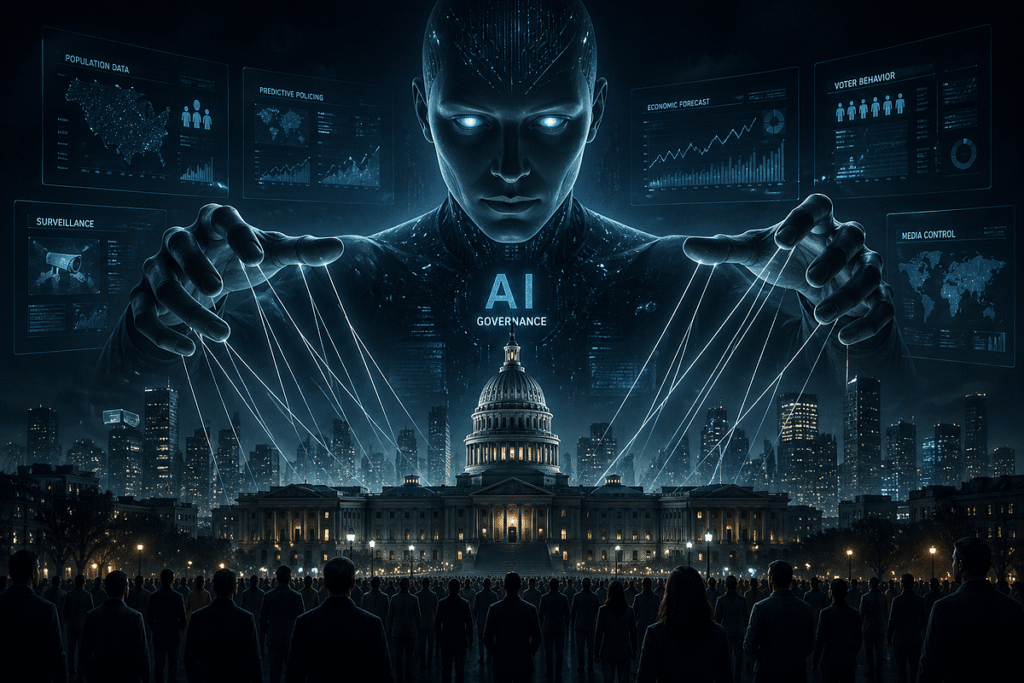
Let’s walk through the three biggest regulatory and business shifts happening this week. First — the US government is now requiring pre-release testing of AI models. Companies like Microsoft and xAI have agreed to give regulators early access to their newest models before they go live to the public. Think of it like a car manufacturer having to pass safety tests before selling a new vehicle. This is a massive turning point. AI is no longer operating in a “move fast and break things” environment — it now has to prove it’s safe before it reaches your hands. 🛡️
AI is now central to the UK’s economic prosperity and national security. We cannot afford to let this technology develop without proper governance. The stakes are too high — for our economy, our security, and our citizens.
— Liz Kendall, UK Technology Secretary, May 2026 💬Second — Lloyds Banking Group has become the first major FTSE blue-chip company to use AI directly in its boardroom. This means that when Lloyds’ board meets to make decisions worth billions of pounds, an AI tool is present — analysing data, flagging risks, and providing recommendations in real time. This is a watershed moment for corporate governance. If one of Britain’s oldest and most respected banks trusts AI at its highest level, others will follow very quickly. 📊 And third — the UK’s Financial Conduct Authority has raised alarms about AI-powered financial chatbots giving investment advice to consumers without being regulated — and has called for urgent government action to close that gap. 🚨

What Does AI Regulation Mean for Everyday People? 🙋♀️💭
Here’s the honest truth — most people don’t think about AI regulation until something goes wrong. An AI gives bad medical advice. A chatbot makes a racist hiring decision. An autonomous system makes a financial error that ruins someone’s savings. Regulation exists to prevent those moments. And the fact that governments are finally taking it seriously is genuinely good news for everyone who uses AI tools — which, in 2026, is pretty much all of us. 🌍
For consumers — regulated AI means the chatbot giving you financial or health advice has been tested and approved, just like a medicine or a car. For businesses — clear AI rules mean less legal uncertainty and more confidence to invest in AI tools. For students entering the workforce — AI governance, AI ethics, and AI policy are now among the fastest-growing career fields in the world. Understanding how AI is regulated isn’t just interesting — it’s becoming essential knowledge for anyone entering any professional field. 🚀

The Race Between AI Innovation and AI Governance 🏁🌐
Here’s the tension at the heart of this moment — AI is moving faster than any regulatory framework can keep up with. The UK’s AI Safety Institute has found that frontier cyber-offence capabilities are doubling every four months. That means by the time a law is drafted, debated, and passed, the technology it’s trying to govern has already evolved twice. This is the central challenge of AI regulation in 2026 — and it’s why some governments are moving toward principles-based regulation rather than rigid rules. Instead of saying “AI must do X”, they’re saying “AI must be safe, transparent, and fair” — and leaving the technical details flexible. 🔄
China is taking a different approach entirely — moving aggressively on domestic AI with cost-conscious open-source models that are now competitive with Western frontier models. The AI regulation race isn’t just happening inside countries — it’s happening between them. How America, Europe, the UK, and China each choose to govern AI will shape the global balance of technological power for the next generation. And the decisions being made right now — this week, this month — will determine which direction that goes. 🌏
Slow Down, Rules Up — AI Is Growing Up 🌱⚖️
The story of AI in May 2026 isn’t just about flashy new models and billion-dollar deals. It’s about a technology reaching a moment of genuine maturity — where the world is finally saying “we need rules, we need oversight, and we need this to work for everyone, not just the few.” That’s not a small thing. That’s civilisation catching up with its own invention. And while it will be messy and imperfect — it is absolutely necessary. 🙏
So the next time someone tells you AI regulation is boring — remind them that the rules being written right now will shape how AI affects your job, your money, your health, and your rights for the next 50 years. Still think it’s boring? Didn’t think so. 😄🔥
📰 Read Full Source Article →